

What We Are (Not): Between New Materialism and the Theory of Sexual Difference
What we are as humans is a question we will never stop answering. If a definitive answer cannot be given, we could, however, analyse how the question has changed in contemporary times, and especially how it has returned to the centre of attention in recent decades. The way in which we question ourselves today is…


Interview to Ivone Gebara on Feminist Theology and Ecofeminism
Co-authored with Vittoria Ferri, Mariateresa Muraca, Chiara Zamboni, Giulia Testi and Anna Maria Piussi. Translated by Caterina Diotto. This article was originally published in italian here. We introduce ourselves to Ivone Gebara. We are Mariateresa Muraca, Chiara Zamboni, Caterina Diotto, Giulia Testi and Anna Maria Piussi. Vittoria Ferri cannot be here, but she is participating…
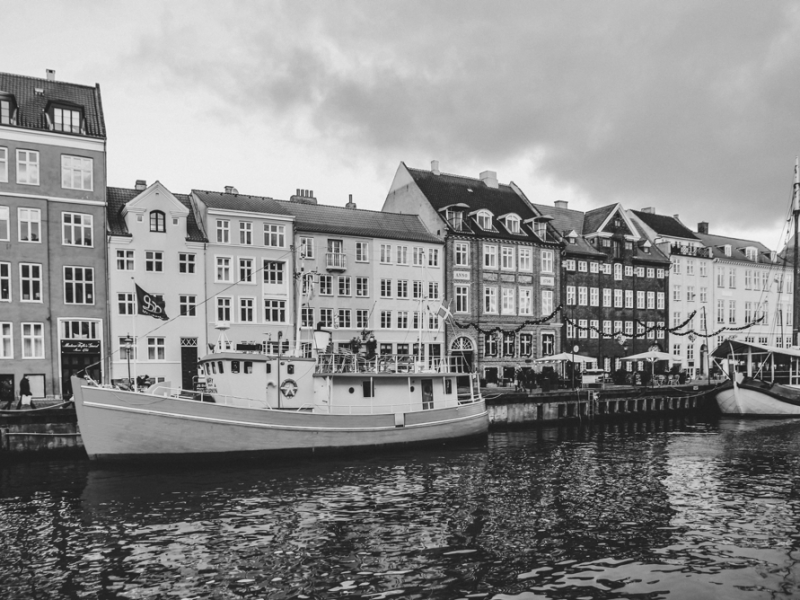
A Colonial Legacy. The Disproportionate Removal of Inuit Children from Their Mothers in Denmark
Denmark’s policies toward Greenlandic families and children from the 1800s to the present day reflect the broader history of colonialism, cultural assimilation, and eventual decolonization. One of the most distressing aspects of this history is the forced removal of Inuit children from their families, a practice that, despite the official recognition of the Inuit culture…

Beauty and Power. Narratives on our bodies
How is the relationship between beauty and the power structures in which we participate articulated? What are its typical mechanisms, at least for what looks at the West and, in particular, Italy? What is happening today in the Digital Age in the narratives on the bodies of girls, boys, of non-binary or trans people, of…
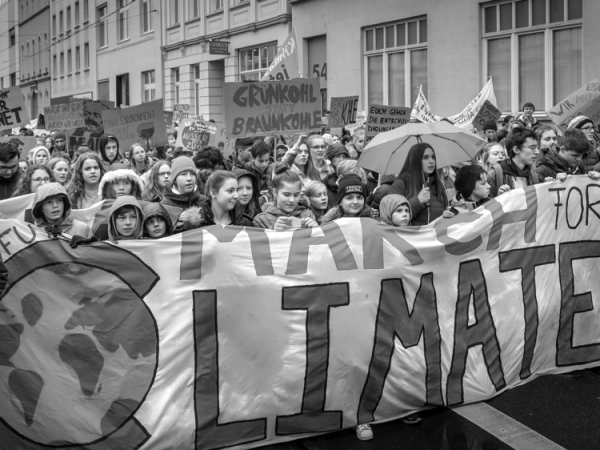
“The best is still here”. Ecofeminism and the Theory of the Sexual Difference
A new spectre is haunting the globalised world, the spectre of Ecofeminism. If Socialism and Communism represented the backbone of political invention between the 19th and 20th century, since the middle of the last century it has been Feminism and Ecofeminism – which on the other hand share some of the roots of the first…
Interview to Mariateresa Muraca on the Movimiento de Mulheres Camponesas (MMC) in Brazil – Political and Philosophical Earnings
Co-authored with M. Muraca, V. Ferri, A. Piussi, G. Testi, C. Zamboni. Translated by Caterina Diotto. The original version, in italian, was published here. Caterina Diotto There are many things that strike me about the experience with the Women Farmers’ Movement in Brazil that Mariateresa has told us about in her books and in the…
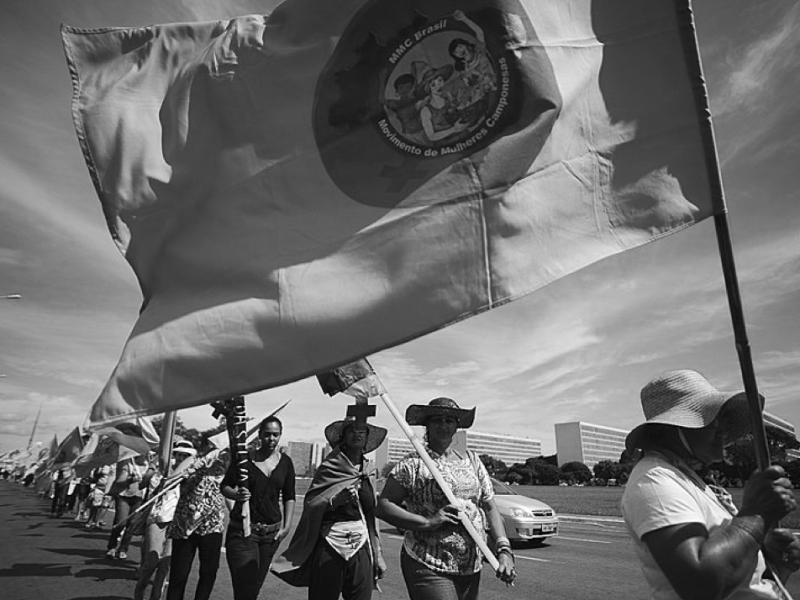
Interview to Mariateresa Muraca on the Movimiento de Mulheres Camponesas (MMC) in Brazil
co-authored with Vittoria Ferri, Annamaria Piussi, Giulia Testi, Chiara Zamboni. Translated by Caterina Diotto. The original version, in italian, was published here. Chiara Zamboni: (introduction) It is not an objective narration that we are asking Mariateresa, it is a knowledge that she has of her experience and of the relationships that she has with people…
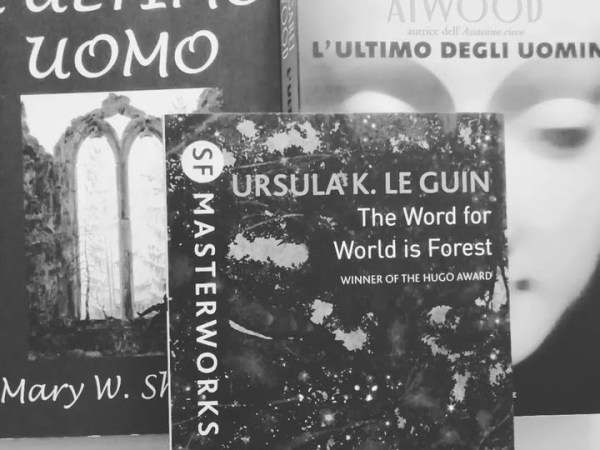
Senses of the Ending. Literary and Political Positioning on the Environmental Crisis
The contribution presents an ecofeminist analysis on Science Fiction and its relation to the political imaginary of a way out from the ecological crisis. Considering three novels from Mary Shelley, Margaret Atwood and Ursula K. Le Guin, it explores the possibilities and contradictions in «worlding» literary counternarratives in relation to the hegemonic representation of the…

Survival strategies. Reflections on this millennium
co-authored with prof. Markus Ophälders. Translated by Caterina Diotto. Preface to Forming to transform. On a pedagogy of Imagination (Mimesis, Milan 2022) […] 2. Some proposal for this Millennium (by Caterina Diotto) It is 1985: fifteen years barely separate us from the beginning of a new millennium. For now, I do not feel that the…

Notes on War
co-authored with C. Zamboni, M. Spagnolli, G. Longobardi, E. Jankowski. Translated by Caterina Diotto. Originally published in italian here. In the war in Ukraine we recognise the expression of a particular clash in the symbolic, between world-forms and languages, which pervades our time and represents a political threshold between the realisation of one world or…

Ecofeminism in South America
Co-authored with Mariateresa Muraca, Chiara Zamboni, Annamaria Piussi. Translated by Caterina Diotto. The original version, in italian, was published here. We would like to get to know some of the paths taken by feminism in areas and places in South America. We are interested in how women, whom we have met or read about, bring…

Uroboros. Ecology, Feminism, Ecofeminism
It matters what stories we tell to tell other stories with; it matters what concepts we think to think other concepts with. It matters wherehow ouroboros swallows its tale, again. Donna Haraway […] Feminist theoretical elaboration has questioned the deep-seated logic of patriarchy – its archetypes, structural mechanisms and recurring patterns – especially since…
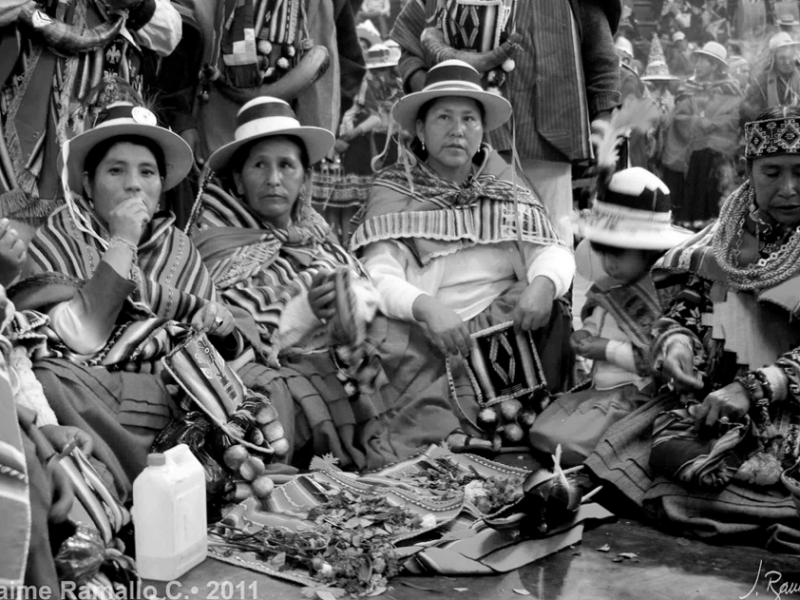
Interview to Antonietta Potente on the Aymara’s community in Bolivia
Co-authored with Mariateresa Muraca, Annamaria Piussi, Chiara Zamboni. Translated by Caterina Diotto. The original version, in italian, was published here. Antonietta Potente: Thank you for the great trust you have shown in my story. It is a part of me that I feel very strongly, that I can never shake off, that has truly shaped…

Walter Benjamin and the Novel between Finitude and Infinity
Walter Benjamin considered reading – along with thought, dreams, waiting, opium and intoxication – a source of “profane illumination” . Moments of intuited truths, connections between horizons of apparently distant meanings, flashes and glimmers, fragments, instants. A contact with truth that indifferently weaves aesthetic impressions, hallucinations, dialectical images and logical reflections into kaleidoscopes of meaning.…
Introduction to “Feminism and Ecology”
co-authored with Mariateresa Muraca, Annamaria Piussi, Chiara Zamboni. Translated by Caterina Diotto. The original version, in italian, was published here. This column stems from a desire to explore issues concerning ecology, which are essential in the times we live in, through the embodied and relational lens of gender difference. We are looking for a method,…

Seeding Wind and Developing Roots. Populisms and Narratives
What are populisms? What are their main characteristics, what narrative mechanisms do they deploy that are capable of gathering the feelings of the multitude? Through the historical-political reflections of Ernesto Laclau, Pierre-André Taguieff, Marco Revelli, Chantal Mouffe, Donatella Di Cesare, Valentina Pazé and Roberto Esposito, and the philosophical thought of Simone Weil, Jean-Luc Nancy, Walter…

Something New on the Western Front
Faced with the spread of the populist right in Italy and Europe, this article proposes, as part of the Great Diotima Seminar 2018 “Sbilanciamoci dalla parte della politica delle donne” a philosophical reading of the phenomenon through the works of Simone Weil, Hannah Arendt and Jean-Luc Nancy. Three authors and three imbalances towards the politics…

A new Practice of History. Considerations on “The Spiral of Time. Living History inside Us” by the Living History Community of the Milan’s Women Bookstore
Starting with the experience of the Community of “Living History” initiated by Marirì Martinengo, this article reflects on the epistemological and political intertwinings of history, historiography and political narratives. “Stories play a very important role in History. A dialectical and profoundly political role: it is through the wide meshes of the narrated stories that the…

Bertrand Russell’s Rational Sexuality. Critical review of moral essays published from 1925 to 1954
Because of his great importance as a logician, one rarely hears about Bertrand Russell’s ethical essays. In these works, however, it is interesting to come into contact with a different side of Russell than the more commonly studied image of the logician-mathematician, a thinker who, while maintaining a lucid and critical gaze on the surrounding…
 Caterina Diotto